
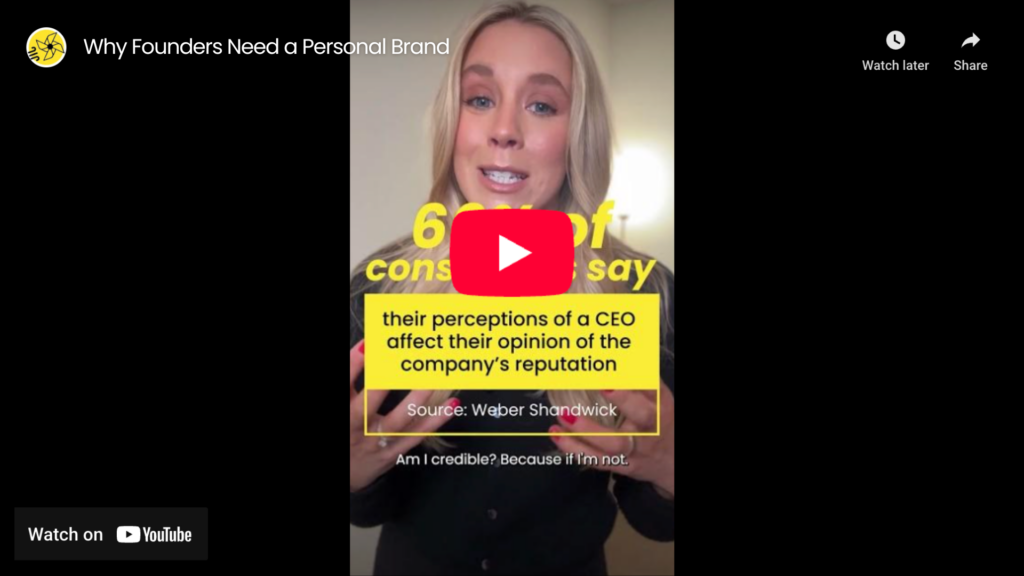
Founders without a personal brand are harder to trust, and because of that, their businesses are harder to trust, too.
That’s not a hot take meant to shame anyone. It’s just the reality of how people make decisions now, especially when they’re choosing between multiple options that all look “fine” on the surface.
If you launched a small business or a startup, chances are you didn’t do that randomly. You probably had credibility in your space, subject-matter expertise, real experience, or, at the very least, a strong reason for why this business needed to exist.
But if no one knows your story—who you are, why you started this, or what makes you qualified to lead it—it becomes much harder for your business to compete.
The competition is thick and crowded in just about every industry. People have options, which means trust has to be built fast.
We Don’t Live in a Funnel World Anymore
We’re in a trust economy now.
People don’t just want to know what they’re buying. They want to know who they’re buying from, especially when it’s a smaller business.
Do people trust massive logos and household names? Sure. Those companies have spent decades building brand equity. They’ve earned default trust through sheer scale and longevity.
But small businesses, startups, and even established companies without that level of brand recognition don’t get that luxury.
If you’re asking someone to trust you with their money, their business, their team, or their reputation, you have to show them why.
If you’re not consistently showing…
- Who’s behind the business
- What qualifies you to do this work
- Why it exists in the first place
…it becomes incredibly difficult for people to trust the business at all.
Visibility Isn’t the Same as Credibility
I was talking with a potential client recently, and this stuck with me.
I found her website. She was technically visible (photos, mentions, a short bio) and everything looked fine. But I had no idea how accomplished she actually was.
I didn’t know how many awards she had won, the caliber of people she consults with or that she was about to travel across the world to participate in a highly exclusive roundtable
None of that came through in her digital presence. So if I had landed on her site without talking to her directly, I would have assumed she was just… another option.
That’s the danger.
When your digital presence doesn’t communicate your credibility, people don’t assume it exists. They move on to someone who makes it obvious.
When Given the Choice, People Choose the Clear Leader
Now imagine this scenario:
You’re comparing two businesses.
One looks “fine.” The website is decent, and the offer makes sense, but the leadership is invisible or vague.
The other is led by a founder who is clearly out front. They share their expertise, explain why the business exists, and they teach, educate, and consistently show up.
Which one feels safer? Which one feels easier to trust? Which one would you choose?
That decision isn’t emotional manipulation, but human psychology.
People want clarity. They want to know who’s responsible. They want to feel like someone competent is at the wheel.
Why People Choose My Company (And It’s Not What You Think)
I think about this a lot in my own business.
I own a marketing company. One of the most saturated and commoditized industries there is. There are endless options that technically offer the same services.
So why do clients choose us?
It’s not because of our custom portal (although it is pretty cool). It’s not because of some flashy process. It’s not because of a clever pitch deck.
It’s because they trust me. They trust our leadership. They trust what we put into the world.
We work to build that trust before a sales call ever happens.
By the time we’re talking, they’ve already seen how I think, what I believe, and what we value as a company.
The sales process becomes easier because credibility has already been established.
The Other Extreme Is Just as Risky
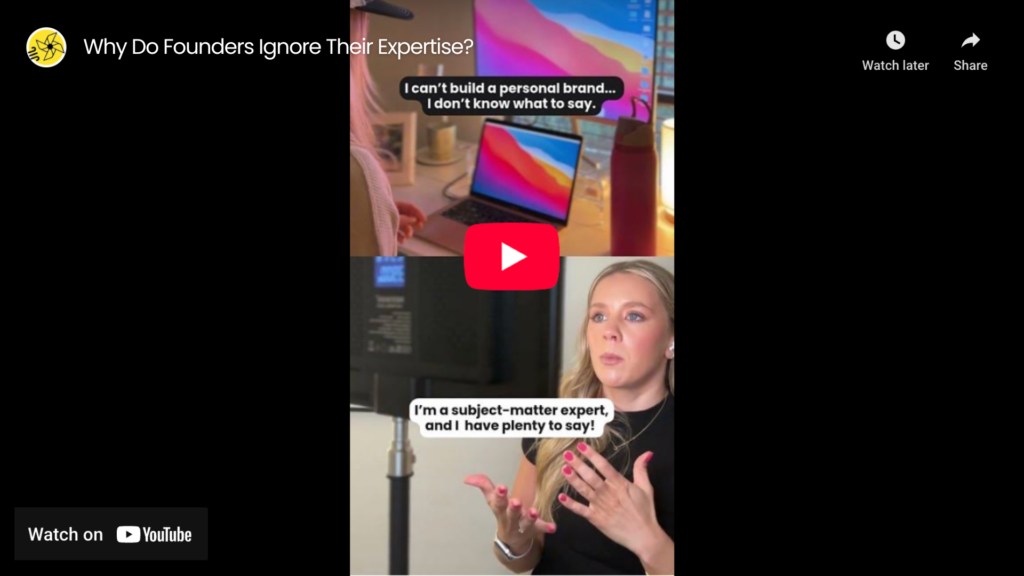
Now, it’s worth saying that being visible without credibility is also a problem.
I was recently searching for a vendor relationship and came across a founder who was very out front… but everything about their presence felt chaotic.
Messy visuals, vague messaging, and content for content’s sake.
It stressed me out, to be honest.
Even though they were visible, they just didn’t seem trustworthy because there didn’t seem to be substance. That’s the balance founders miss:
- No presence is a liability
- Fluff-only presence is a liability
Trust is built through clear, consistent, credible leadership.
A Faceless Brand Is a Disadvantage Now
You know this but it’s worth repeating:
When someone goes searching for a solution, they don’t land on just one option. They see several. The business that wins is almost always the one with:
- Visible leadership
- Consistent education
- Real insight into the industry
- A human presence that feels grounded and trustworthy
Even if a faceless brand is producing a lot of company content, it’s still harder to trust. It doesn’t feel real in the same way.
Seeing a real person on video with unique thoughts, an actual point of view, and in a consistent way over time… that creates a connection that can accelerate trust.
Stop Hiding Behind the Logo
Hiding behind your business is not protecting you.
It’s not serving your company, building trust, opening doors, or positioning you the way you want to be in your industry.
If you want to operate in today’s trust economy—and if you want to be chosen over competitors—you have to be willing to step out front.
Not as a content creator or influencer, but as the credible, capable leader behind the business you built.
If you’re ready to start building a personal brand that can actually help grow your company, let’s talk.